Groupes électrogènes diesel : l’épine dorsale énergétique des plateformes de forage offshore
Dans le vaste et rude environnement marin, les plateformes de forage offshore se dressent comme des « îles » artificielles qui explorent et exploitent de précieuses ressources pétrolières et gazières sous le fond marin. Derrière chaque opération de forage réussie se trouve un héros méconnu fournissant une énergie stable et fiable : le groupe électrogène diesel. En tant que source d'énergie principale des plateformes de forage offshore, il assume l'importante mission d'alimenter en électricité tous les équipements et systèmes, garantissant la sécurité, l'efficacité et la continuité des opérations offshore. Cet article présente les connaissances clés sur les groupes électrogènes diesel pour plateformes de forage offshore, afin de vous aider à comprendre leurs principes de fonctionnement, leurs exigences particulières, leurs scénarios d'application et les éléments essentiels de leur maintenance.
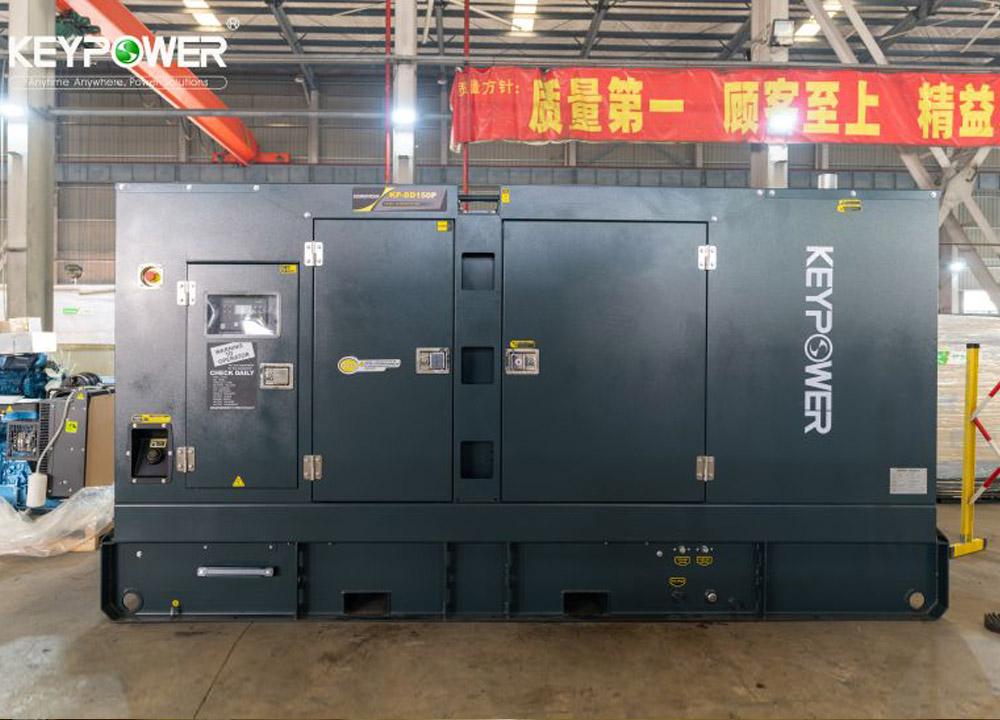
1. Qu'est-ce qu'un groupe électrogène diesel de forage offshore ?
Un groupe électrogène diesel de forage offshore est un équipement spécial de production d'énergie conçu et fabriqué pour l'environnement unique des plateformes de forage offshore. Il se compose principalement de quatre éléments essentiels : le moteur diesel, le générateur, le système de commande et les équipements auxiliaires (système de refroidissement, système de carburant, système de lubrification, etc.). Contrairement aux groupes électrogènes diesel terrestres, les modèles offshore doivent subir une conception et des adaptations spéciales pour s'adapter aux conditions marines difficiles telles que les embruns salins élevés, la forte humidité, les fortes vibrations, l'espace limité et les conditions météorologiques extrêmes fréquentes.
Sa fonction principale est de convertir l'énergie chimique du diesel en énergie mécanique grâce au moteur diesel, puis de convertir l'énergie mécanique en énergie électrique grâce au générateur, afin de fournir une alimentation stable en courant alternatif ou continu à l'ensemble de la plateforme de forage. Des énormes appareils de forage, pompes à boue et équipements de contrôle des puits aux installations de vie quotidiennes telles que l'éclairage, la climatisation et les systèmes de communication sur la plateforme, presque tous les équipements électriques dépendent de l'alimentation fournie par les groupes électrogènes diesel.
2. Principe de fonctionnement : comment produit-il de l'énergie en continu ?
Le processus de production d'énergie des groupes électrogènes diesel offshore suit une chaîne simple et efficace de conversion d'énergie : combustion du diesel → production d'énergie mécanique → génération d'énergie électrique, principalement réalisée grâce au fonctionnement coordonné du moteur diesel et du générateur.
Tout d'abord, le moteur diesel effectue un cycle de fonctionnement à quatre temps pour générer de l'énergie mécanique. Les quatre temps comprennent l'admission, la compression, la détente et l'échappement. Pendant le temps d'admission, l'air est aspiré dans le cylindre ; pendant le temps de compression, le piston comprime l'air afin d'augmenter sa température et sa pression ; lorsque la compression est presque terminée, l'injecteur pulvérise du diesel atomisé dans l'air à haute température et haute pression, qui s'enflamme et brûle rapidement, produisant un gaz à haute température et haute pression qui pousse le piston vers le bas pour effectuer le travail (temps de détente) ; enfin, la soupape d'échappement s'ouvre et le piston expulse les gaz d'échappement du cylindre (temps d'échappement). Ce cycle se répète continuellement pour entraîner le vilebrequin du moteur diesel à tourner à une vitesse stable, produisant une énergie mécanique[9].
Ensuite, le générateur convertit l'énergie mécanique en énergie électrique selon le principe de l'induction électromagnétique. Le rotor du générateur synchrone est équipé d'un enroulement d'excitation qui génère un champ magnétique après avoir été alimenté en courant continu. Lorsque le moteur diesel entraîne le rotor en rotation, le champ magnétique tourne également avec le rotor. Selon la loi de Faraday sur l'induction électromagnétique, l'enroulement du stator coupe les lignes de force magnétique du rotor, générant ainsi une force électromotrice induite. Après la génération de la force électromotrice induite, un courant est produit dans le circuit fermé de charge, qui est transmis aux différents équipements électriques par la borne du générateur afin d'assurer l'alimentation électrique[5].
De plus, le système de commande est comme le « cerveau » du groupe électrogène. Il est équipé d'un régulateur électronique et d'un régulateur automatique de tension (AVR) afin de garantir une sortie électrique stable. Le régulateur électronique ajuste l'alimentation en carburant en temps réel selon les variations de vitesse afin de maintenir la stabilité de la fréquence du courant alternatif ; l'AVR ajuste l'intensité du courant d'excitation selon les variations de la tension de sortie pour maintenir une tension de sortie stable, permettant ainsi à l'alimentation électrique de répondre aux exigences des divers équipements de précision présents sur la plateforme[5].
3. Conception spéciale : adaptation à l'environnement offshore difficile
Les plateformes de forage offshore évoluent toute l'année dans un environnement difficile, avec des embruns salins élevés, une forte humidité, des vents et des vagues puissants ainsi qu'un espace d'installation limité. Par conséquent, les groupes électrogènes diesel offshore doivent disposer de conceptions spéciales afin de garantir un fonctionnement fiable dans de tels environnements, ce qui constitue la principale différence avec les groupes électrogènes terrestres.
Tout d'abord, la conception anticorrosion est essentielle. L'environnement marin est riche en ions salins, qui sont très corrosifs pour les composants métalliques. Par conséquent, la coque, les conduites, le bloc moteur et les autres composants du groupe électrogène subissent des traitements anticorrosion spéciaux, tels que la galvanisation, l'application de peinture anticorrosion ou l'utilisation d'alliages résistants à la corrosion, afin d'empêcher la rouille et la corrosion et de prolonger la durée de vie de l'équipement.
Deuxièmement, une conception antivibration et antichoc est nécessaire. La plateforme offshore subit de fortes secousses sous l'action du vent et des vagues, ce qui peut endommager les composants internes du groupe électrogène. Par conséquent, le groupe électrogène est équipé d'un amortisseur haute performance et les composants essentiels (tels que le vilebrequin du moteur et le rotor du générateur) sont renforcés pour résister aux impacts des vibrations et garantir un fonctionnement stable même dans des conditions de fortes secousses.
Troisièmement, une conception à structure compacte est adoptée. L'espace sur la plateforme offshore est très précieux, le groupe électrogène diesel doit donc être conçu pour être compact et de petite taille tout en garantissant une puissance de sortie suffisante. De nombreux fabricants intègrent le moteur diesel, le générateur, le système de commande et les équipements auxiliaires sur une même base afin d'économiser de l'espace d'installation et de faciliter le transport et l'installation.
En outre, il possède également une conception étanche et résistante à l'humidité ainsi qu'une conception antidéflagrante. Les composants électriques du groupe électrogène sont tous étanches et résistants à l'humidité, empêchant les courts-circuits causés par l'humidité ; étant donné que le forage offshore implique des hydrocarbures inflammables et explosifs, le groupe électrogène est également équipé de dispositifs antidéflagrants (tels que des enveloppes antidéflagrantes et des pare-étincelles) afin d'éviter les incendies et les explosions causés par des étincelles électriques[10]. Certains modèles répondent également à des normes internationales d'émissions telles que IMO Tier II et EPA Marine Tier 2 afin de réduire la pollution environnementale[7].
4. Scénarios d'application : alimenter chaque aspect du forage offshore
Sur les plateformes de forage offshore, les groupes électrogènes diesel sont la « source vitale » de l'alimentation électrique, couvrant presque tous les aspects des opérations de forage et de la vie quotidienne, et leur importance est évidente.
En matière de opérations de forage, il fournit de l'énergie aux équipements essentiels tels que les appareils de forage, les pompes à boue et les systèmes de contrôle des puits. L'appareil de forage nécessite une alimentation stable pour entraîner la rotation du trépan et forer le fond marin ; la pompe à boue dépend de l'énergie pour faire circuler la boue de forage, refroidir le trépan et évacuer les déblais ; le système de contrôle des puits (tel que l'obturateur de puits) nécessite une alimentation d'urgence afin de garantir son activation rapide en cas de danger, évitant ainsi les éruptions de puits et assurant la sécurité du forage.
En matière d'exploitation et maintenance de la plateforme, il fournit de l'énergie aux équipements auxiliaires tels que les grues, les treuils et les pompes de pipeline. Les grues sont utilisées pour soulever les équipements et les matériaux ; les treuils servent à tirer les tubes de forage et les câbles ; les pompes de pipeline sont utilisées pour transporter le pétrole, le gaz et d'autres fluides. Ces équipements sont essentiels au fonctionnement normal de la plateforme, et leur alimentation électrique ne peut pas être interrompue.
En termes de vie quotidienne sur la plateforme, il fournit de l'énergie pour l'éclairage, la climatisation, les systèmes d'approvisionnement en eau et d'évacuation des eaux, les communications et la restauration. Le personnel sur la plateforme a besoin d'un environnement de vie confortable, et le fonctionnement normal de ces installations est directement lié à l'efficacité du travail ainsi qu'à la santé physique et mentale du personnel. En même temps, le système de communication (tel que le radar et la radio) dépend également d'une alimentation électrique stable pour assurer les contacts entre la plateforme, la côte et les autres navires.
En outre, les groupes électrogènes diesel jouent également le rôle d'alimentation électrique de secours. Si le système d'alimentation principal de la plateforme tombe en panne (comme une panne du réseau électrique ou une défaillance d'équipement), le groupe électrogène diesel peut être démarré rapidement pour fournir une alimentation d'urgence, garantissant que les équipements essentiels (tels que les systèmes de contrôle des puits et les équipements de sauvetage) continuent de fonctionner, évitant ainsi les pertes de production et les accidents de sécurité causés par une interruption de l'alimentation électrique[8]. Par exemple, HIMOINSA a fourni plusieurs groupes électrogènes diesel pour des plateformes offshore dans le golfe du Mexique, fournissant une alimentation stable aux pompes de cimentation et à d'autres équipements pendant la construction des plateformes.
5. Points essentiels de maintenance : garantir un fonctionnement stable à long terme
L'environnement offshore est difficile, et la maintenance des groupes électrogènes diesel est plus importante et plus complexe que celle des équipements terrestres. Une maintenance régulière et scientifique peut non seulement prolonger la durée de vie des équipements, mais aussi éviter les pannes soudaines, garantissant ainsi la continuité des opérations offshore. Les principaux points de maintenance sont les suivants :
Premièrement, inspection quotidienne. Avant de démarrer le groupe électrogène chaque jour, vérifiez le niveau d'huile, le niveau du liquide de refroidissement et le volume de carburant afin de vous assurer qu'ils se situent dans la plage normale ; vérifiez la tension de la batterie et le câblage pour garantir qu'ils sont bien fixés et exempts de desserrage ; vérifiez que le filtre à air n'est pas obstrué et que les pièces de raccordement ne présentent pas de fuites. Pendant le fonctionnement, surveillez régulièrement les paramètres des instruments, tels que la pression d'huile (qui doit être maintenue entre 2 et 5 bar), la température du liquide de refroidissement (ne dépassant pas 90 ℃), la tension de sortie (variation ne dépassant pas ±5 %) et la fréquence (stable à 50/60 Hz ±0,5 Hz), et soyez attentif au bruit du moteur ainsi qu'à la couleur des gaz d'échappement afin de détecter toute anomalie[6].
Deuxièmement, maintenance régulière. Selon les recommandations du fabricant, effectuez une maintenance régulière en fonction des heures de fonctionnement : remplacez l'huile moteur et le filtre à huile toutes les 250 heures ; nettoyez ou remplacez le filtre à air toutes les 500 heures ; vérifiez et réglez le jeu des soupapes toutes les 1000 heures ; nettoyez le système de carburant et le système de refroidissement toutes les 2000 heures. Pour les groupes électrogènes qui n'ont pas été utilisés pendant longtemps, ils doivent être démarrés régulièrement pour un fonctionnement à vide afin d'éviter le vieillissement des composants.
Troisièmement, maintenance spéciale pour l'environnement offshore. Renforcez l'inspection anticorrosion, vérifiez régulièrement la couche anticorrosion de l'équipement et retouchez la peinture à temps en cas de dommage ; nettoyez régulièrement le brouillard salin présent à la surface de l'équipement afin d'éviter la corrosion ; vérifiez régulièrement l'amortisseur pour garantir son effet d'absorption des chocs ; établissez un stock de pièces de rechange essentielles, comprenant notamment les filtres, courroies, capteurs, etc., afin de faciliter leur remplacement rapide en cas de panne, ce qui est particulièrement important pour les plateformes offshore éloignées de la côte[6].
Quatrièmement, traitement des pannes. Si le groupe électrogène tombe en panne (par exemple, difficulté de démarrage, puissance insuffisante, faible pression d'huile), il doit être arrêté à temps pour inspection. Par exemple, une difficulté de démarrage peut être causée par une puissance insuffisante de la batterie ou des problèmes du système de carburant ; une puissance insuffisante peut être due à un filtre à air obstrué ou à une mauvaise qualité du carburant. Après le dépannage, l'équipement peut être redémarré afin d'éviter des dommages supplémentaires. En cas d'arrêt soudain, la charge doit d'abord être coupée et la cause du déclenchement du dispositif de protection doit être vérifiée.
6. Tendance de développement : plus efficace, plus respectueux de l'environnement et plus intelligent
Avec le développement continu des technologies d'exploration pétrolière et gazière offshore et l'augmentation des exigences en matière de protection de l'environnement et d'économie d'énergie, les groupes électrogènes diesel de forage offshore évoluent également vers une plus grande efficacité, une meilleure protection de l'environnement et davantage d'intelligence.
En termes d'économie d'énergie et amélioration de l'efficacité, les fabricants optimisent constamment la structure des moteurs diesel, adoptant des technologies telles que l'injection de carburant à rampe commune et la suralimentation avec refroidissement intermédiaire afin d'améliorer le taux d'utilisation du carburant et de réduire la consommation de carburant. Parallèlement, la densité de puissance du groupe électrogène est améliorée afin qu'il puisse produire davantage d'énergie dans un espace plus réduit.
En termes deprotection de l'environnement, avec le renforcement des normes mondiales d'émission, de plus en plus de groupes électrogènes diesel offshore adoptent des technologies d'énergie propre, telles que l'utilisation de diesel à faible teneur en soufre, l'installation de filtres à particules (DPF) et de systèmes de réduction catalytique sélective (SCR), afin de réduire les émissions d'oxydes d'azote, d'oxydes de soufre et de particules, répondant ainsi aux exigences de protection de l'environnement offshore.
En termes d'intelligence, le système de contrôle du groupe électrogène devient de plus en plus intelligent. Il peut réaliser la surveillance à distance, le diagnostic des pannes et l'ajustement automatique grâce à la technologie de l'Internet des objets. Le centre de surveillance à terre peut suivre en temps réel l'état de fonctionnement du groupe électrogène sur la plateforme, détecter à l'avance les pannes potentielles et effectuer une maintenance à distance, ce qui réduit considérablement la charge de travail du personnel de maintenance sur site et améliore la fiabilité du fonctionnement des équipements.



 IPv6 réseau pris en charge
 français
 français
 English
 Deutsch
 русский
 español
 português
 Nederlands
 العربية
 Polski
 中文
中文